




Zlatni Rat Beach on the island of Brač is one of the few beaches in the world instantly recognizable at first sight. With its ever changing shape and golden pebbles, it’s not only a symbol of the Adriatic but one of Europe’s most photogenic natural wonders. Nestled near the charming town of Bol, Zlatni Rat is more than just a popular spot to take a swim. It’s an experience that captures the essence of Croatia’s coastline.
Whether you arrive on a private boat tour or spend a relaxed day in the sun, here’s everything you need to know about Croatia’s most famous beach.
The beauty of Zlatni Rat
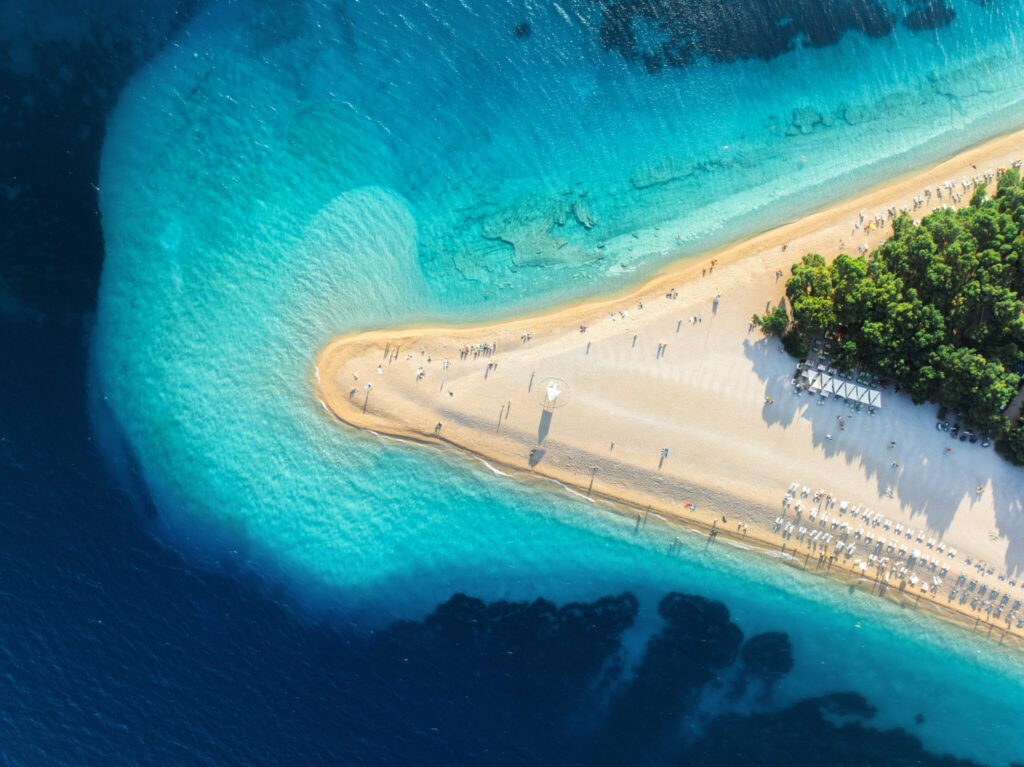
Zlatni Rat, translated to “Golden Horn,” is a natural phenomenon that makes this beach so unique. The beach extends like a narrow tongue almost half a kilometer into the sea and constantly changes its shape depending on the wind and tides. Sometimes it curves slightly to the east, sometimes to the west – nature redesigns it daily, making it the most photographed beach in Croatia.
Formed from millions of smooth golden and white pebbles (not sand, as many think) it stands out as a rare geological marvel. The contrast between the shore, deep blue sea, and the pine forest that surrounds it makes Zlatni Rat one of the most breathtaking beaches in the Mediterranean.
A beach shaped by wind, currents, and local legend
Local stories add another layer to Zlatni Rat’s appeal. For centuries, islanders have observed the way the tip of the beach bends and shifts, often linking its movement to changes in weather and seasons. While science explains this phenomenon through sea currents and winds, locals still enjoy sharing their own interpretations, giving the beach a sense of mystery that goes beyond geology.
What remains unchanged is the fact that Zlatni Rat is alive in a way few beaches are. Visitors who return year after year are greeted by a slightly different version of the Golden Horn. This is not just a destination, but a natural process unfolding in real time.
Tradition meets charm in the town of Bol
Just a short walk from Zlatni Rat lies the picturesque town of Bol, where traditional Dalmatian charm blends with a relaxed seaside atmosphere. Once a quiet fishing village, Bol has evolved into a lively yet elegant coastal town, known for its stone streets, historic monasteries, and inviting waterfront cafés.
Despite its popularity, Bol has managed to preserve its authentic character. It is a perfect place to enjoy local cuisine, explore cultural landmarks, or simply soak in the rhythm of island life after a day at the beach. If you’re staying for the night, make sure to catch the sunset. The sun sinking into the Adriatic after a day at Zlatni Rat – can you imagine a better scenario?
Getting to Zlatni Rat
If you’re wondering how to get to Zlatni Rat from Split, there are a few options to consider. The most budget-friendly choice is a catamaran from Split to Bol, which runs regularly during the season. Once in Bol, Zlatni Rat is an easy walk or a short ride away.
Visitors staying elsewhere on Brač, including Supetar, can reach Bol by bus or car, making the beach easily accessible from across the island.
For a more comfortable and time-efficient experience, many travelers choose a private transfer from Split. Arriving by sea allows you to avoid ferry schedules and crowds while enjoying direct access to Zlatni Rat and the coastline along the way.
It also gives you the flexibility to visit outside peak hours, when the beach is quieter and the light is softer. Early morning or late afternoon arrivals often reveal a calmer, more intimate side of Zlatni Rat, turning a popular landmark into a truly memorable experience.
Best time to visit Zlatni Rat
We can’t stress this enough, but Zlatni Rat, being one of the most unique beaches in Europe, is also one of the most crowded in the summer. The high season runs from June to September, when the beach can get quite crowded. If you want a more relaxed experience, consider visiting early in the morning, later in the afternoon, or outside the peak months. The weather is still pleasant, and you’ll have more space to enjoy the golden pebbles and crystal-clear waters.
Spring and early autumn are especially appealing for visitors who prefer a slower pace. Sea temperatures remain comfortable, the city feels less crowded, and the island’s natural colors become even more pronounced. It’s an excellent time to experience Zlatni Rat in a more authentic, local way.

Experience Zlatni Rat with Condor Yachting
Zlatni Rat on Brač is more than a regular beach – it’s a natural wonder to explore. Golden pebbles and the ever-changing shape of the beach make it a must-see on any Adriatic itinerary.
With Condor Yachting’s private and group tours, your visit becomes effortless and tailored to your pace. Approaching the beach by boat allows you to admire its unique shape from the sea, swim in beautiful areas, and enjoy your time away from the busy crowds. A trip to with Condor Yachting turns a simple beach day into a complete Adriatic experience.